

X-Ray

Imaging Technique | Clinical Applications | Role in Diagnostic Evaluation | Use in Clinical Workflow | Clinical Value

X-ray imaging is typically the first diagnostic study obtained when evaluating a wide range of clinical conditions. It is commonly used for initial assessment of symptoms involving the chest, bones, and joints, as well as selected abdominal concerns. X-ray exams are performed across hospital-based and outpatient settings throughout Washington State and Alaska, supporting both routine and urgent imaging needs.
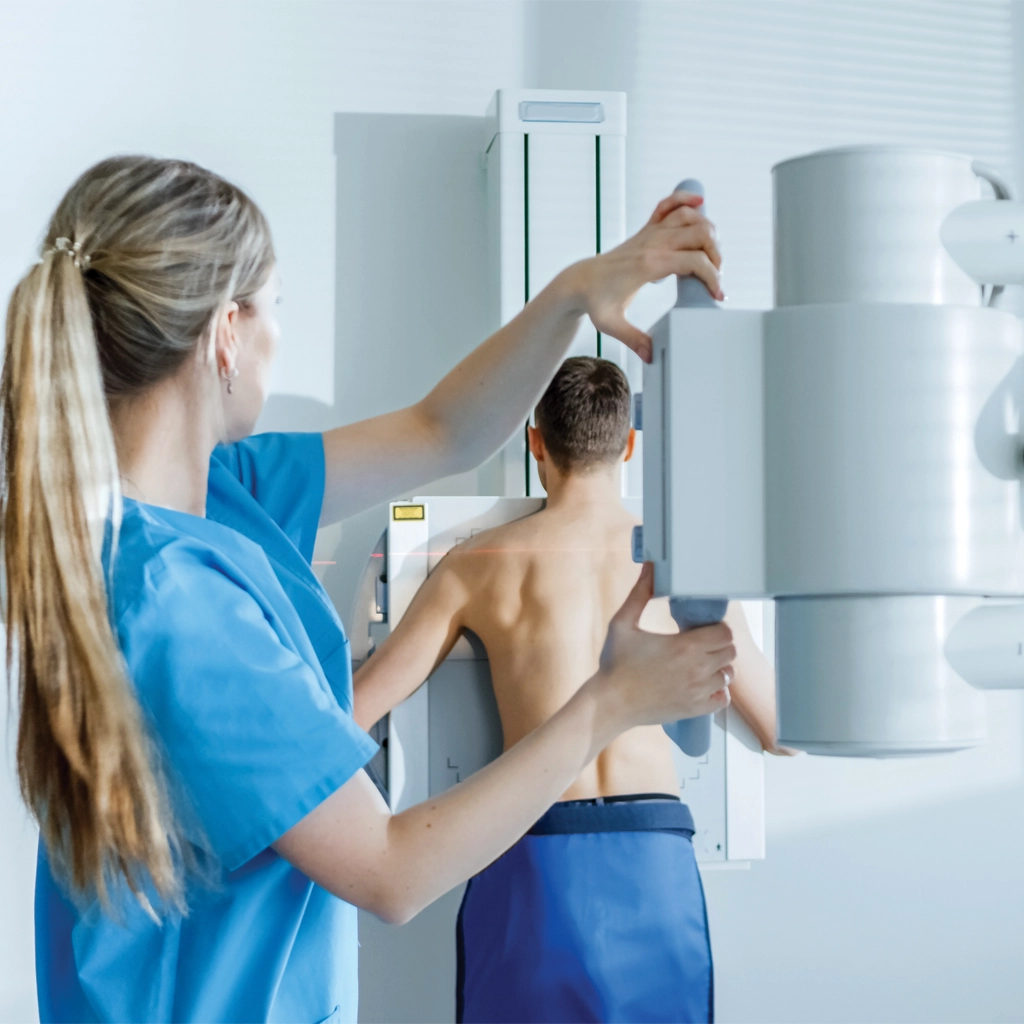

x-ray

Imaging Technique

X-ray imaging uses a small amount of ionizing radiation to create images of internal structures. The resulting images show how different tissues absorb radiation, allowing visualization of bones, air-filled structures, and certain soft-tissue outlines.

Images are obtained quickly and in standardized views to support consistent evaluation and comparison over time. Depending on the clinical indication, multiple views may be acquired to assess the area of interest better. Positioning may be adjusted during the exam to ensure that the relevant anatomy is clearly visualized.

Clinical Applications

X-rays are most commonly used to evaluate musculoskeletal conditions, including fractures, joint abnormalities, and degenerative changes. It is often obtained following injury or when symptoms suggest bone or joint involvement.

In chest imaging, X-ray supports the evaluation of the lungs, heart, and surrounding structures. It can identify conditions such as pneumonia, pleural effusion, and other abnormalities affecting the thoracic cavity. Chest X-rays are frequently obtained in both outpatient and inpatient settings as part of routine and acute evaluation.

X-ray may also be used to evaluate selected abdominal conditions, particularly when assessing for bowel obstruction, abnormal gas patterns, or the presence of foreign bodies.

Role in Diagnostic Evaluation

X-ray is typically used as an initial step in the imaging process. Its speed and accessibility make it well-suited for early evaluation, particularly when a rapid assessment is needed.

In many cases, X-ray findings are sufficient to guide management without additional imaging. When further evaluation is required, X-ray results help determine whether follow-up imaging with CT, MRI, or other modalities is appropriate.

Because X-ray provides a general overview of the area being examined, it is often used to identify obvious abnormalities or to narrow the differential diagnosis before more advanced imaging is considered.

X-ray imaging also serves as a reference point when additional imaging is performed. Findings identified on CT or MRI are often interpreted in the context of earlier radiographs, particularly in musculoskeletal and chest imaging. This relationship helps establish a baseline and provides additional context for evaluating change over time.

Use in Clinical Workflow

X-rays are widely used across different stages of care, including initial evaluation, follow-up, and monitoring. It may be used to assess fracture healing, progression of degenerative changes, or treatment response over time.

Because of its efficiency, X-rays are frequently performed in both outpatient and hospital settings, including urgent care and emergency departments. It plays an important role in triage by helping providers determine the next steps in care.

Clinical Value

The value of X-ray lies in its ability to provide rapid, accessible imaging that supports early clinical decision-making. While it does not offer the same level of detail as CT or MRI, it remains an essential tool for initial assessment and ongoing monitoring in many clinical scenarios. A digital X-ray sensor captures the X-rays that pass through, leaving an image that can show bone fractures, foreign objects, organ abnormalities, and more.1

In practice, X-ray is relied upon when a straightforward and efficient evaluation is needed, particularly when it provides sufficient information to guide care without additional imaging.


  1. Bellingham Advanced Medical Imaging – X-ray Imaging Services

Contact us today for more information about x-ray scans, or click below to meet our radiologists.