Clinical Applications
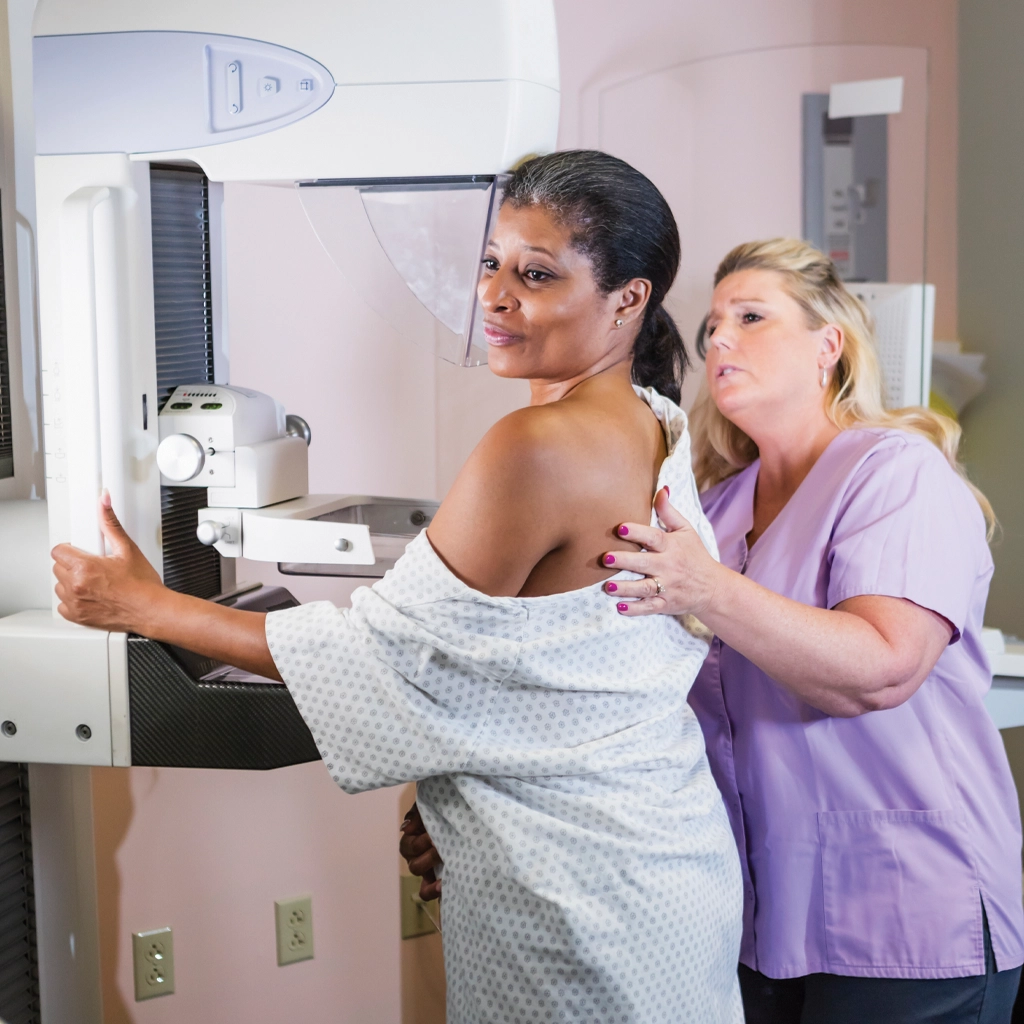
Mammography is used to detect a range of findings, including masses, calcifications, and architectural distortion. It plays a central role in the early detection of breast cancer, particularly when findings are subtle or not associated with symptoms.
In diagnostic settings, mammography is used to evaluate further abnormalities identified during screening or clinical examination. Findings are interpreted in the context of the patient’s history and prior imaging, when available. When appropriate, additional imaging or intervention may be recommended based on the results.
Mammography is often the starting point for breast imaging, with follow-up studies performed as needed to clarify findings or guide management.
Mammography also plays an important role in longitudinal breast imaging, where comparison with prior studies is essential. Subtle changes in tissue appearance over time can be as clinically significant as new findings, particularly in screening populations. For this reason, consistency in imaging technique and access to prior exams are important components of accurate interpretation. This longitudinal perspective allows radiologists to identify patterns of stability or progression that may influence management decisions.