

Ultrasound

Imaging Technique | Clinical Applications | Role in Diagnostic Evaluation | Procedural Guidance | Clinical Value

Ultrasound is used for real-time imaging of soft tissues, abdominal organs, vascular structures, and selected musculoskeletal and pelvic anatomy. It is often obtained as an initial imaging study in a variety of clinical scenarios because it provides immediate visualization without ionizing radiation. Ultrasound exams are performed across hospital-based and outpatient settings throughout Washington State and Alaska, supporting both scheduled studies and more immediate evaluations when indicated.
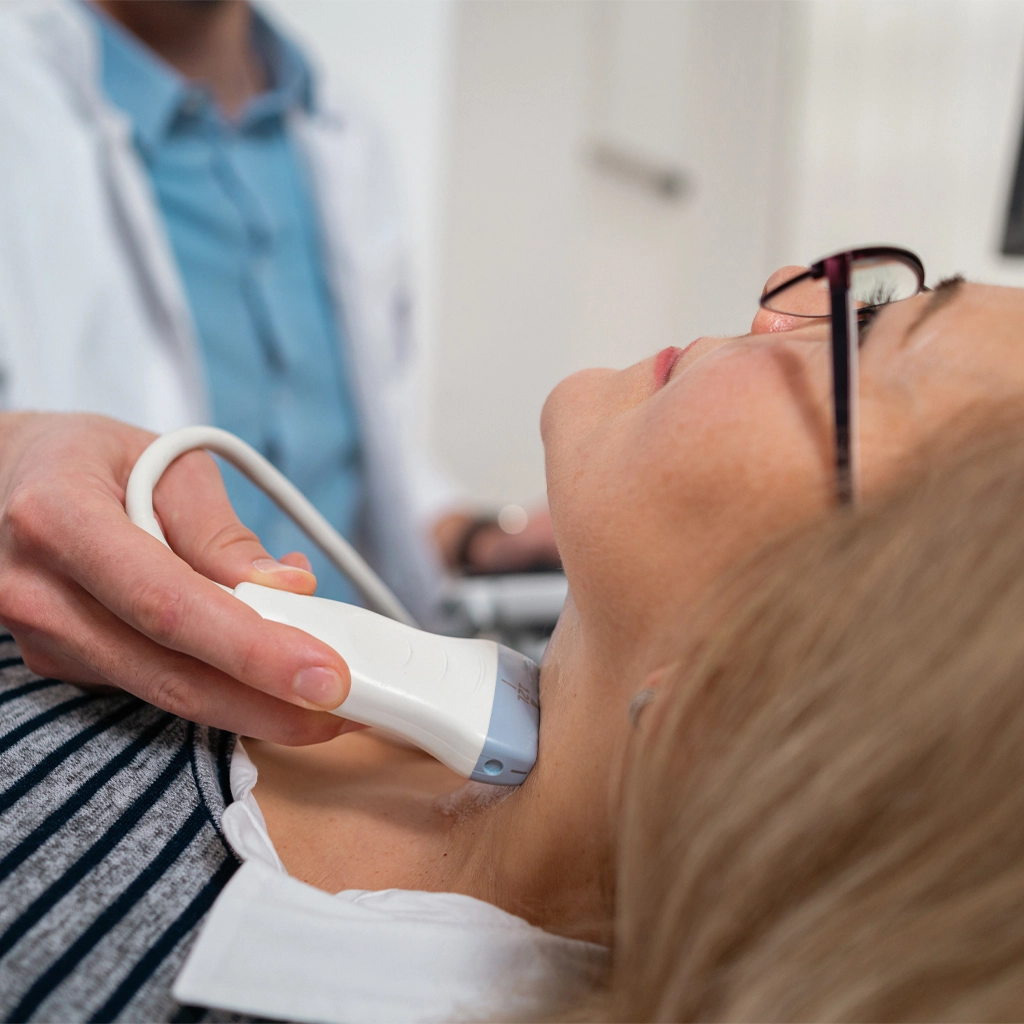

ultrasound

Imaging Technique

Ultrasound uses high-frequency sound waves to generate images of internal structures. A handheld transducer is placed directly on the area of interest, allowing images to be acquired and adjusted continuously during the exam. This real-time capability allows for direct interaction with both the patient and the anatomy being evaluated.

Because the exam is performed dynamically, positioning and technique can be adjusted throughout the study. The technologist can apply pressure, change probe orientation, and evaluate structures from multiple angles during acquisition. This allows the exam to be tailored in real time based on observed findings, rather than relying solely on predetermined imaging sequences.

Clinical Applications

Ultrasound is commonly used to evaluate abdominal organs, including the liver, gallbladder, kidneys, and pancreas. It is frequently used to assess for gallstones, biliary disease, renal abnormalities, and fluid collections. In pelvic imaging, ultrasound is used to evaluate the uterus and ovaries and is often selected as a first-line modality for gynecologic concerns.

In vascular imaging, ultrasound facilitates assessment of blood flow in arteries and veins. It is commonly used to evaluate conditions such as deep vein thrombosis, arterial stenosis, and other vascular abnormalities. Doppler techniques allow for the assessment of both the direction and velocity of blood flow.

Ultrasound is also used to evaluate superficial soft tissues, including masses, cysts, and fluid collections. In musculoskeletal applications, it may be used to assess tendons, ligaments, and other soft tissue structures in select cases.

Role in Diagnostic Evaluation

Ultrasound is often obtained early in the diagnostic process, particularly when a focused, real-time assessment is needed. It is frequently selected as a first-line study for abdominal, pelvic, and vascular concerns due to its accessibility and ability to provide immediate information.
Because the exam is performed interactively, ultrasound allows for targeted evaluation of specific areas of concern. Findings can be assessed in the context of the patient’s symptoms during the exam, and additional images can be obtained as needed to evaluate the structures in question further.

In some cases, ultrasound findings are sufficient to guide management without additional imaging. In others, the results help determine whether further evaluation with CT or MRI is needed.

Because ultrasound is highly operator-dependent, the quality and usefulness of the study are closely tied to real-time decision-making during the exam. The technologist’s ability to adjust technique, evaluate areas of concern, and obtain additional images as needed contributes directly to the diagnostic value of the study. This interactive component allows ultrasound to be adapted to each patient and clinical scenario.

Procedural Guidance

Ultrasound is commonly used to guide procedures that require precise localization. These may include biopsies, aspirations, and fluid drainage procedures. Real-time imaging allows for visualization of needle placement, helping ensure accurate targeting while minimizing risk to surrounding structures.

Because of this capability, ultrasound plays an important role not only in diagnosis but also in procedural support. Its ability to provide continuous visualization during interventions makes it a preferred modality for many image-guided procedures.

Clinical Value

The value of ultrasound lies in its flexibility and real-time capabilities. It allows for immediate assessment, direct interaction with the area being examined, and the ability to adapt the study based on findings during the exam.

In practice, ultrasound is relied upon when a focused evaluation is needed quickly or when dynamic assessment provides additional clinical value beyond static imaging.

From abdominal imaging to soft tissue evaluation, many diagnostic applications are highlighted in this resource covering advanced ultrasound imaging techniques.

Contact us today for more information about ultrasound scans, or click below to meet our radiologists.